
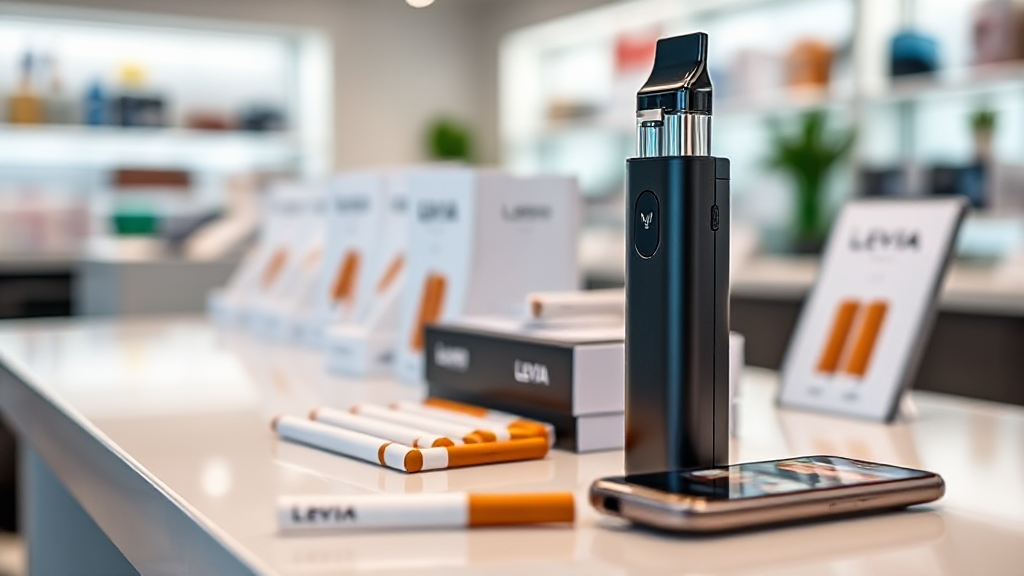
Why Most First-Time Buyers Get LEVIA Tobacco-Free Sticks Wrong
The single most common mistake people make when they first look into LEVIA tobacco-free sticks is assuming they work exactly like a heat-not-burn stick. They order a pack, slide it into a device that was built for something else, and then wonder why the experience feels flat, harsh, or inconsistent. As a community moderator, I see this question come up almost every week, and the answer is almost never the stick itself. It is the setup around the stick. If you understand what LEVIA is, what it is not, and what it needs from a device, the whole process becomes simple. That is what this page is for. I am going to walk you through the requirements first, then the procedure, then the checks that stop small problems from becoming expensive ones. If you already know you want to browse the range, you can head straight to LEVIA tobacco-free sticks and come back for the setup details. For everyone else, let us start with the background that makes the rest make sense.
What LEVIA Tobacco-Free Sticks Actually Are
LEVIA belongs to a category of consumable sticks that contain no tobacco leaf. That single fact changes almost everything about how they are used. A traditional heat-not-burn stick relies on a tobacco plug that releases nicotine and aroma when a blade or a heating element raises its temperature. A tobacco-free stick replaces that plug with a blend of other botanical materials, often including tea or herbal components, and it is designed to deliver flavour and vapour without burning anything and without tobacco leaf in the mix.
This is why the category sits apart from both combustible cigarettes and conventional HNB products. It is not a cigarette, because nothing combusts. It is not a classic heated tobacco stick, because there is no tobacco. And it is not a vape, because there is no liquid and no coil soaked in e-liquid. It is its own thing, and it behaves like its own thing. Once you accept that, the device requirements stop being mysterious.
The second thing to understand is that tobacco-free does not automatically mean nicotine-free. Depending on the specific product line and the market it is sold in, a tobacco-free stick may or may not contain nicotine. This is exactly the kind of detail that trips people up when they order quickly without reading the product description. In Europe, labelling rules vary by country, and the only reliable source of truth is the product page itself. Read it before you buy, not after.
The third point is about compatibility. LEVIA sticks are built to work with devices that support the tobacco-free stick format. Some devices handle both tobacco and tobacco-free sticks. Some handle only one. Some handle both but need a different temperature profile for each. The physical dimensions of the stick are usually close enough that a stick will fit into the slot, which is precisely why so many people assume it will work. Fitting is not the same as functioning. The heating curve matters more than the millimetres.
Requirements Before You Order Anything
Before you add anything to a basket, there are four things you should confirm. Skipping any one of them is how the first-time mistake happens.
First, confirm your device supports tobacco-free sticks. Check the manufacturer documentation or the product listing for your device. If the device was released specifically with a tobacco-free mode, you are in good shape. If it was released before the tobacco-free category became common, you may need a firmware update or a newer model. Do not assume that a device marketed as “universal” covers this format. Universal usually means it accepts several stick sizes, not that it adjusts its heating profile.
Second, confirm the flavour range you actually want. LEVIA sticks come in a spread of flavour profiles, and the differences are more noticeable than people expect. Some lean toward a fresh, cool character. Some lean toward a warmer, richer character. Some sit in the middle. If you order a single pack of a single flavour and it does not suit you, that is not a product failure, it is a sampling problem. Ordering two or three profiles at once is the fastest way to find your baseline.
Third, confirm the quantity and format. Sticks are sold in packs, and packs are sold in cartons. The pack is the unit you carry, the carton is the unit you store. If you are trying the category for the first time, a single pack per flavour is enough. If you already know your preference, cartons are more economical per stick and reduce the number of deliveries you need.
Fourth, confirm the seller and the delivery terms. This is the requirement people skip most often, and it is the one that causes the most frustration. You want a seller that clearly states what it ships, where it ships, how long delivery takes, and what payment methods it accepts. Puff EU is an online shop focused on heat-not-burn devices and sticks, with fast delivery to Europe and secure payment options, which is the kind of baseline you should expect from any seller in this category. If a listing is vague about shipping or payment, treat that as a warning rather than a convenience.
Age verification is the fifth requirement, and it is non-negotiable. These products are for adults. Any legitimate seller will require confirmation of age at checkout or on delivery. If a seller does not, that is a reason to walk away, not a reason to celebrate.
The Procedure: From First Order to First Stick
Once the requirements are clear, the procedure itself is short. The reason people still get it wrong is that they rush the middle step.
Step one: choose your device and your sticks as a pair, not separately. If you are buying a device at the same time as your first sticks, buy them from a listing that confirms compatibility. If you already own a device, buy sticks that match it. This sounds obvious, but the majority of confused messages I see come from people who bought the two halves of the system in two different places, at two different times, without checking that they belonged together.
Step two: read the pack and the product page. The pack tells you the flavour and the format. The product page tells you the nicotine status, the number of sticks, and any device notes. Between the two, you should be able to answer three questions: what is in it, how many are in it, and what it is designed to be used with. If you cannot answer all three, you are not ready to order.
Step three: store them properly on arrival. Tobacco-free sticks are sensitive to moisture and heat in the same way their tobacco-based cousins are. Keep them in the pack until you use them, keep the pack closed, and keep them away from direct sunlight and radiators. A kitchen drawer next to the oven is a bad home. A cool, dry cupboard is a good one. This is a small habit that makes a large difference to consistency.
Step four: insert correctly and let the device do its job. Insert the stick fully, without forcing it. Do not twist it. Do not pre-heat the device with the stick already inside if the manual says otherwise. Start the session and wait for the device to signal that it is ready. The first few draws of any heated product are lighter than the later ones, and that is normal. If you draw hard and fast, you will pull more air than vapour and conclude, wrongly, that the stick is weak.
Step five: finish the session, then clean. When the device signals the end of the session, stop. Continuing past the signal is how you get a burnt or bitter note, and it is also how residue builds up. Let the device cool, then remove the stick. Wipe the heating chamber according to the manufacturer’s instructions. A thirty-second clean after each session prevents the slow decline in flavour that people misattribute to the sticks.
That is the whole procedure. Five steps, none of them complicated, all of them easy to skip when you are excited about a new product.
What to Check After Your First Few Sessions
The checks are where you separate a good experience from a frustrating one. Give it three to five sessions before you form a judgement, and check the following.
Check the consistency of the draw. If the first session was good and the fifth was weak, the problem is usually the device, not the stick. Look at the heating chamber. If it is coated or discoloured, clean it. If cleaning restores the experience, you have found your answer.
Check the flavour against your expectation. Tobacco-free sticks are not trying to replicate a cigarette. If you are comparing them directly to a combustible product, you will always find them different, because they are different. Compare them to other tobacco-free sticks instead, and judge them on their own terms.
Check the nicotine status of what you bought. If you expected a certain strength and the product page says otherwise, that is a purchasing error, not a product error. Re-read the listing and adjust your next order. This is the single most common source of disappointment, and it is entirely avoidable.
Check the pack integrity. If a pack arrives damaged, open, or damp, do not use it. Contact the seller. A reputable seller will replace it. This is one of the practical reasons to buy from an established shop rather than an unknown listing, because the after-sales process matters as much as the price.
Check your own usage pattern. If you find yourself using more sticks than you intended, that is worth noticing. The category is designed as an alternative for adult smokers, not as a way to increase consumption. Keep an eye on the pack count and adjust your order size accordingly.
One more check that people rarely think about: check the device’s firmware and cleaning schedule. Many devices in this category receive updates that change how they handle tobacco-free sticks. A device that performed poorly last year may perform well after an update. Before you blame the consumable, make sure the hardware is current and clean.
Common Mistakes and How to Avoid Them
Mistake one: assuming all sticks are interchangeable. They are not. Different brands and different lines within a brand use different blends and different moisture levels. A device tuned for one may underperform with another. Match the stick to the device, and if you switch brands, expect a short adjustment period.
Mistake two: buying in bulk before tasting. Cartons are cheaper per stick, but only if you like the flavour. Buy single packs first. Find two or three profiles you enjoy. Then buy in bulk. The money you save by skipping this step is rarely worth the carton you end up not using.
Mistake three: ignoring the nicotine question. Tobacco-free and nicotine-free are not synonyms. Read the label. If the distinction matters to you, and for many people it does, confirm it before checkout rather than after delivery.
Mistake four: over-drawing. New users often pull harder than they should, trying to get more out of each session. This cools the heating element, reduces vapour, and makes the experience worse. Slow, steady draws are the correct technique for every heated product, including this one.
Mistake five: skipping the clean. Residue accumulates quietly. Flavour drops gradually. By the time you notice, you blame the sticks. Clean the device on schedule and the sticks will keep performing.
Mistake six: storing them badly. Heat and humidity are the two enemies. A car glovebox in summer is the worst possible storage location. A cool cupboard is the best. If you buy in bulk, store the unopened cartons properly and rotate your stock so older packs are used first.
Mistake seven: choosing a seller on price alone. The cheapest listing is not always the best value once you factor in delivery time, payment security, and what happens if something goes wrong. Look for clear shipping terms, secure payment options, and a seller that specialises in this category rather than one that sells everything. A focused shop knows the products and can answer questions about compatibility.
How LEVIA Fits Into the Wider Heat-Not-Burn Market
The heat-not-burn market has grown into two broad branches. One branch is built around tobacco sticks, where the consumable contains a processed tobacco plug. The other branch is built around tobacco-free sticks, where the consumable contains a botanical blend instead. LEVIA sits firmly in the second branch, and that position explains both its appeal and its limitations.
The appeal is straightforward. People who want the ritual and the format of a heated product, but who prefer to avoid tobacco leaf, find the tobacco-free branch attractive. The format is familiar, the device is familiar, and the session structure is familiar. What changes is the consumable itself.
The limitation is also straightforward. Because the consumable is different, the device has to be tuned differently. A tobacco-free stick needs a heating profile that suits its blend, and not every device provides that. This is why the category rewards buyers who do a little research before ordering and punishes buyers who assume everything fits everything.
For European buyers, there is an additional layer. Regulations differ across countries, labelling requirements differ, and what is available in one market may not be available in another. A seller that ships across Europe has to navigate that landscape, which is one reason to favour established shops with clear product information. You want to know exactly what you are receiving, in a language you can read, with terms you can verify.
It is also worth saying plainly what this category is not. It is not a smoking cessation product, and it is not marketed as one. It is an alternative format for adults who already use nicotine or who are curious about heated products. Anyone looking for a medically supervised way to quit should speak to a healthcare professional, not a shop. Keeping that boundary clear is part of being a responsible participant in this space.
Frequently Asked Questions
Are LEVIA tobacco-free sticks the same as heated tobacco sticks?
No. Heated tobacco sticks contain a tobacco plug. Tobacco-free sticks contain a botanical blend without tobacco leaf. They may look similar and fit similar devices, but they are different consumables and may require different device settings.
Do tobacco-free sticks contain nicotine?
It depends on the specific product. Some do, some do not. Always check the product page or the pack label for the exact status of the item you are buying. Do not assume either way.
Can I use them in any heat-not-burn device?
Not reliably. The stick may physically fit, but the device needs a compatible heating profile for the tobacco-free format. Check your device documentation or the product listing before you order.
How should I store them?
Keep them in the closed pack, in a cool, dry place, away from direct sunlight and heat sources. Avoid humid rooms and hot vehicles. Rotate older packs to the front so you use them first.
How long does a session last?
It depends on the device and the stick, but most sessions follow a fixed cycle that the device signals when complete. Stop when the device signals the end. Continuing past that point affects flavour and builds residue.
Why does the flavour seem weaker after a few days?
In most cases, the device needs cleaning. Residue in the heating chamber reduces vapour production and dulls the flavour. Clean the device according to the manufacturer’s instructions and try again before concluding that the sticks have changed.
If you take one thing from this page, take the order of operations. Requirements first, procedure second, checks third. Most of the frustration people report in this category comes from doing those three things in the wrong order. Get the pairing right, read the label, store them properly, clean the device, and the rest follows naturally.


Leave a Reply